
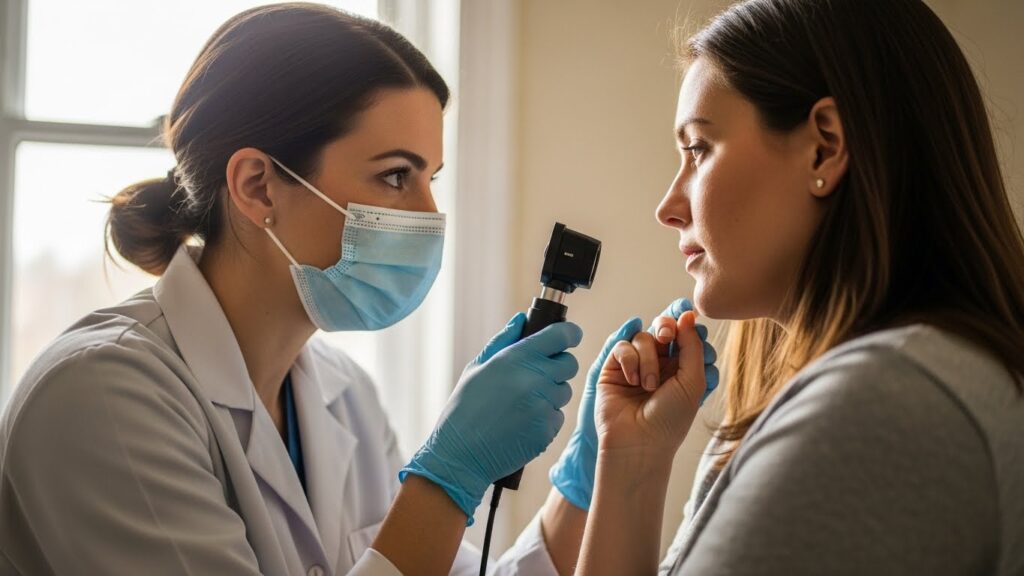
A full body skin check is one of the most straightforward things you can do to protect your health — and one of the most commonly put off. For many people, uncertainty about what the appointment involves is enough to delay booking. If that sounds familiar, this guide is for you. Camberwell Health is an accredited skin cancer specialist clinic in Camberwell, and we want to make the process as clear and comfortable as possible.
Why Full Body Skin Checks Matter in Australia
Australia has one of the highest rates of skin cancer in the world. More than two-thirds of Australians will be diagnosed with skin cancer by the time they turn 70. Melanoma — the most serious form of skin cancer — is highly treatable when caught early but can spread rapidly if left undetected.
A full-body skin check allows a trained GP to examine your skin systematically, looking for spots or lesions that may warrant further investigation. Early detection saves lives.
Who Should Have a Skin Check?
While anyone can develop skin cancer, certain factors increase your risk:
- Fair skin, light hair, or light eyes
- A history of sunburn, particularly in childhood
- Personal or family history of skin cancer or melanoma
- A large number of moles or unusual-looking moles
- Spending significant time outdoors, particularly in high UV conditions
- Working outdoors
- A history of tanning bed use
Even if you don’t have obvious risk factors, regular skin checks are recommended for all adults in Australia. If you’re unsure how often you should be checked, your GP can advise based on your individual risk profile.
What to Expect at a Full Body Skin Check
Before the appointment: Wear comfortable clothing that is easy to remove. Avoid nail polish if possible, as your GP may wish to examine your nail beds. Remove make-up before your appointment, including foundation, so the skin on your face can be clearly examined.
During the appointment, your GP will ask you to undress to your underwear so that your entire skin surface can be examined systematically. A gown or sheet will be provided for your comfort and modesty. The examination covers the scalp, face, neck, chest, back, arms, hands, legs, and feet —including the spaces between the toes and under the nails.
Your GP will use a dermatoscope — a handheld device with a magnifying lens and light — to examine spots more closely. This allows them to see structures beneath the skin surface that are not visible to the naked eye.
After the examination: Your GP will discuss their findings with you. Most spots will be normal and require no further action. If a spot looks suspicious, your GP may recommend monitoring it at a follow-up appointment, taking a photograph to track any changes, or arranging a biopsy. A biopsy involves removing all or part of the lesion for laboratory analysis — this is the only way to diagnose or rule out skin cancer definitively.
How Long Does a Skin Check Take?
A full body skin check typically takes 20 to 30 minutes. If you have a large number of moles or spots that require closer examination, it may take a little longer. Let the reception team know when you book so that enough time is set aside.
What About Spots That Appear Between Checks?
If you notice a new spot or a change in an existing spot between your scheduled skin checks, don’t wait until your next appointment. Book an appointment to have it looked at promptly. The ABCDE rule is a useful guide for self-examination:
- A — Asymmetry: One half doesn’t match the other
- B — Border: Irregular, ragged, or blurred edges
- C — Colour: Uneven colour or multiple shades within one spot
- D — Diameter: Larger than 6mm (though melanomas can be smaller)
- E — Evolution: Any change in size, shape, colour, or new symptoms such as bleeding or itching
Booking a Skin Check in Camberwell
Camberwell Health is an accredited skin cancer specialist clinic. To book a full-body skin check, visit HotDoc or call us on (03) 9882 0055. We recommend booking a dedicated skin check appointment rather than trying to fit one into a standard short consultation.