
This post contains clinical information about a medical treatment. It is recommended for review by a credentialled GP at the practice before publishing.
Platelet Rich Plasma therapy — commonly known as PRP — has attracted considerable attention in recent years as a treatment option for both medical and cosmetic purposes. It’s a procedure that uses components of your own blood to support the body’s natural repair and regeneration processes. At Camberwell Health in Camberwell, PRP therapy is offered as part of our cosmetic services.
What Is PRP Therapy?
Platelet Rich Plasma therapy is a treatment that involves drawing a small amount of your own blood, processing it to concentrate the platelets, and then reintroducing that concentrated plasma to a targeted area of the body or skin.
Platelets are tiny cells in the blood that play a central role in clotting and wound healing. They contain a range of growth factors — proteins that signal cells to repair tissue, stimulate collagen production, and promote regeneration. The principle behind PRP therapy is that delivering a concentrated dose of these growth factors to a specific area accelerates the body’s natural healing and regenerative response.
How Is PRP Prepared?
The process begins with a standard blood draw, similar to having a blood test. The blood sample is then placed in a centrifuge, which spins at high speed to separate the blood into its components. The platelet-rich layer is extracted and prepared for injection or topical application.
Because PRP is derived from your own blood, the risk of allergic reaction or rejection is very low.
What Is PRP Used For?
PRP has been used across a range of medical and cosmetic applications. At Camberwell Health, PRP is offered as a cosmetic treatment. Common cosmetic uses include:
Skin rejuvenation: PRP is injected or applied to the skin to stimulate collagen production and improve skin texture, tone, and overall quality. This is sometimes referred to as a PRP facial or skin treatment.
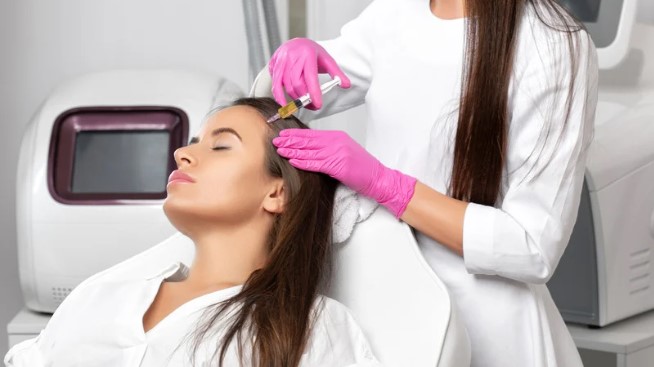
Hair restoration: PRP is used to stimulate hair follicles and support hair regrowth in individuals experiencing hair thinning or loss. It is not a cure for all types of hair loss and is most effective for certain patterns of thinning.
What Does the Procedure Involve?
A PRP treatment appointment typically involves the following steps:
- A consultation to discuss your concerns, suitability, and what to expect
- A blood draw (a small volume, similar to a standard blood test)
- Processing of the blood in a centrifuge (typically 10 to 15 minutes)
- Application of topical anaesthetic cream to the treatment area if required
- Injection or application of the prepared PRP to the target area
The procedure itself is generally well tolerated. Some redness, swelling, or bruising at the treatment site is common and typically resolves within a few days.
How Many Sessions Are Needed?
Results from a single PRP session may be subtle. Most practitioners recommend an initial course of two to three sessions, spaced four to six weeks apart, followed by maintenance treatments as needed. Your GP will discuss what a realistic treatment plan looks like for your individual situation.
Is PRP Right for You?
PRP therapy is not suitable for everyone. A consultation with your GP is required before proceeding. Certain blood disorders, medications (including blood thinners), and active infections or skin conditions in the treatment area may preclude treatment. Your GP will review your medical history and advise whether PRP is appropriate for you.
It’s also important to approach PRP with realistic expectations. Results vary between individuals, and multiple sessions are typically required to see meaningful improvement.
Book a PRP Consultation in Camberwell
If you’re interested in learning more about PRP therapy at Camberwell Health, book a consultation with one of our GPs. We’re located at 676 Burke Road, Camberwell. Book online through HotDoc or call us on (03) 9882 0055.
This article is intended as general health information only. PRP therapy carries risks and is not suitable for everyone. Please consult your GP to discuss whether this treatment is appropriate for your individual circumstances.